
Select your language


Kayseri Castle is one of the most significant historical fortifications in Anatolia. The earliest known reference to the castle dates back to the 3rd century AD, appearing on coins from the reign of Roman Emperor Gordian III.
Over the centuries, the castle was restored and modified by various civilizations, including the Romans, Byzantines, Danishmends, Seljuks, Dulkadirids, Karamanids, and Ottomans. Today, a significant portion of the inner walls remains intact, offering visitors a remarkable journey through history.
The outer castle once surrounded a vast area within the city of Kayseri and served as the primary defensive structure.
Originally built during the Roman period, the walls were later reconstructed and narrowed during the reign of Byzantine Emperor Justinian. According to the Byzantine historian Procopius, the original walls enclosed a very large area, which was later reduced to better protect the city.
Today, only a few sections of the outer walls and several bastions remain. Despite this, these remnants still reflect the grandeur of the original structure.
The outer walls of Kayseri Castle feature five main gates:
The Yeni Gate was expanded during the Ottoman period under Sultan Selim II, as documented by historical inscriptions.
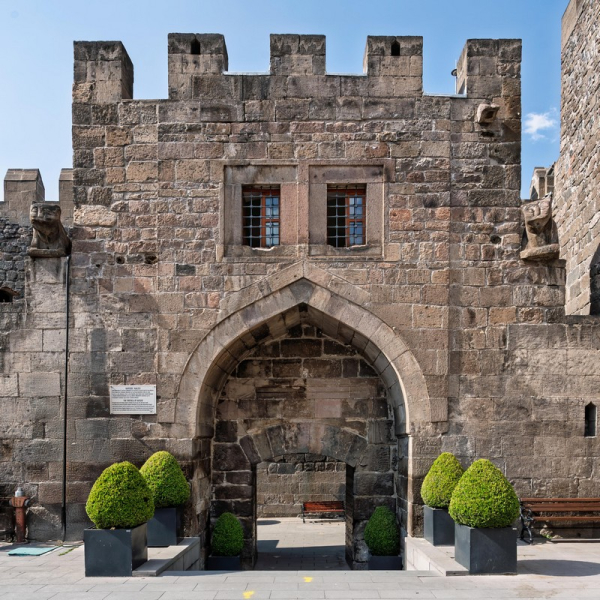
The inner castle is the most well-preserved and impressive part of the complex. It stands as an independent fortified structure within the outer walls.
Restored by the Seljuks, Dulkadirids, Karamanids, and Ottomans, the inner castle showcases a strong and strategic defensive design.
The surrounding moat, once filled with water for defense, has been transformed into a green recreational area in recent years.
One of the most notable structures within the inner castle is a mosque dating back to the Ottoman period.
This mosque was commissioned by Fatih Sultan Mehmed in 1467 under the supervision of Gedik Ahmet Pasha.
Today, the castle area remains lively, combining its historical atmosphere with active commercial life.
Kayseri Castle contains numerous inscriptions from different periods, documenting restorations and political authority throughout history.
Repairs carried out during the reign of Seljuk Sultan Alaeddin Keykubad in 1224, as well as later renovations during the Dulkadirid and Ottoman periods, are all recorded through these inscriptions.
Located in the heart of Kayseri, the castle is easily accessible and stands as one of the city’s top tourist attractions.
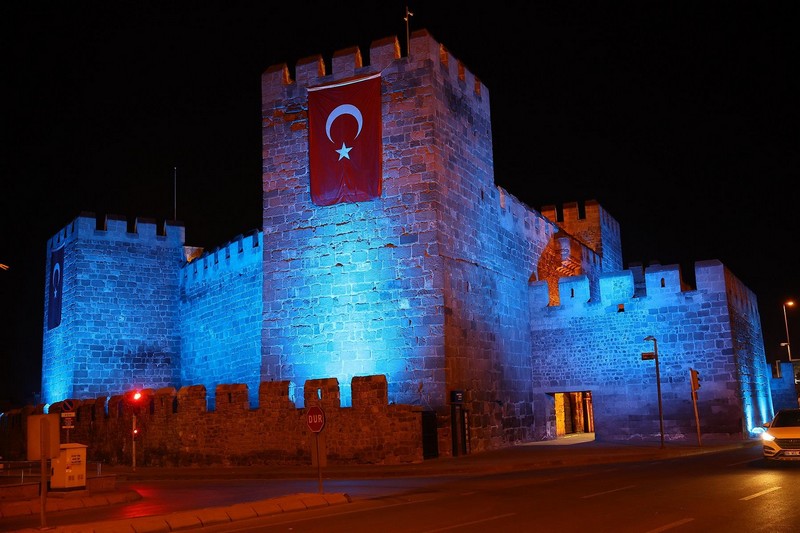
With its illuminated walls and unique atmosphere, especially at sunset and nighttime, Kayseri Castle offers excellent opportunities for photography and cultural exploration.